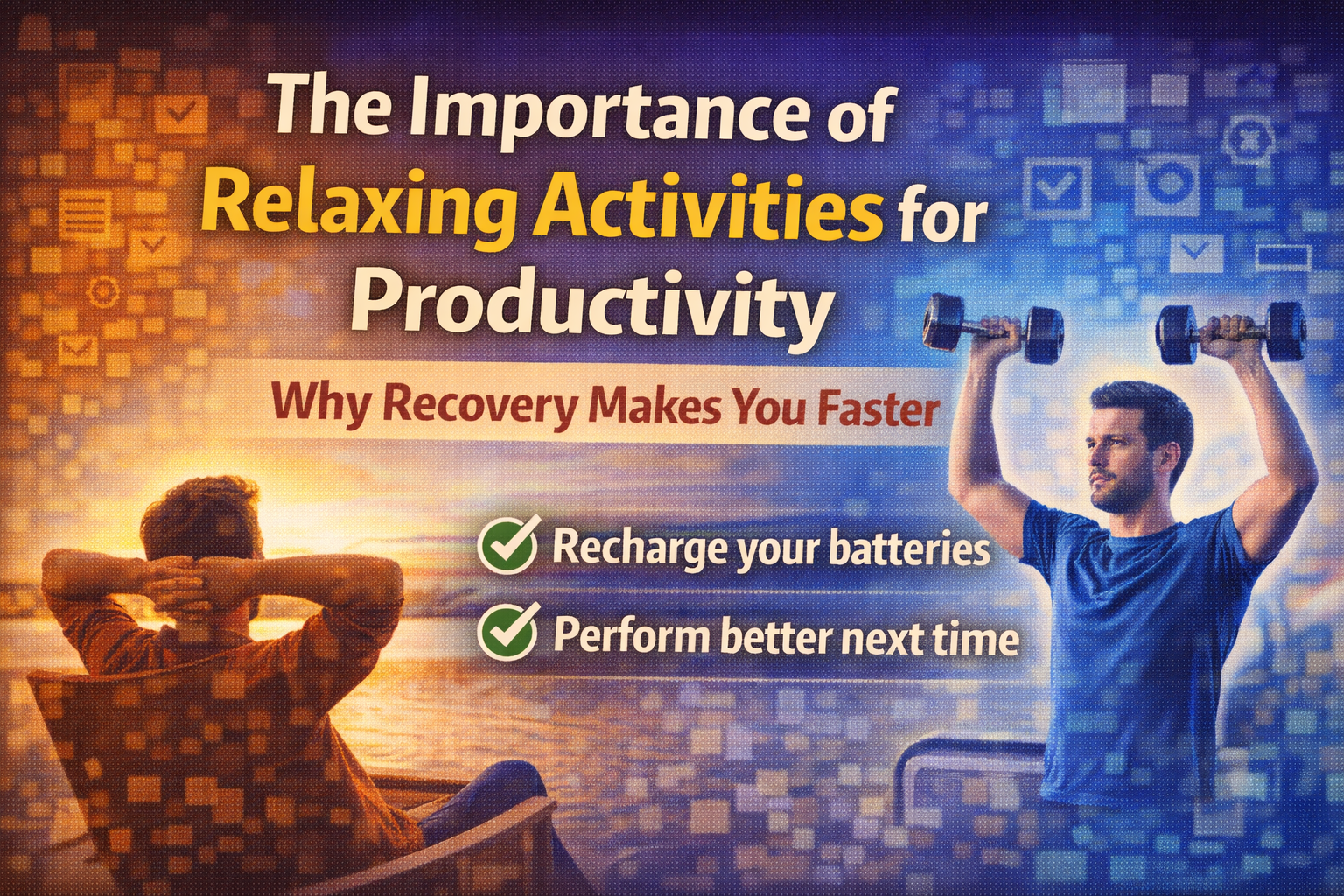
The Importance of Relaxing Activities for Productivity (Why Recovery Makes You Faster)
Introduction
Most people treat relaxation like a reward.
"I'll relax after I finish everything."
But productivity doesn't work like that, because "everything" is never finished.
Relaxation isn't a luxury. It's part of the system.
If you want consistent output, good decisions, and long-term progress, you need activities that recharge you.
Not because you're weak. Because your brain is a battery.
The real reason relaxation increases productivity
When you don't recharge, you don't just feel tired.
You get:
- weaker focus
- more procrastination
- worse decisions
- lower patience
- more mistakes
- less creativity
- more craving for instant gratification
That's why people "fall off" goals. Not because they lack discipline. Because they're running on empty.
Relaxation restores the thing productivity depends on: energy + clarity.
You already know what relaxes you (and that's important)
Relaxation is personal.
Some people recharge with:
- walking outside
- music
- gym / sports
- reading
- cooking
- gaming in moderation
- time with friends/family
- journaling
- cleaning/organizing (for some)
- a sauna or hot shower
- quiet time with no input
The key is not the activity. The key is the effect: it reduces mental load and brings you back to baseline.
Most people already know which activities do that for them. They just don't schedule them.
Relaxation is "maintenance," not laziness
Think of it like:
- sleep is daily maintenance
- relaxation is active maintenance
- weekly review is mental maintenance
If you skip maintenance, performance drops.
And it drops in a predictable way: your next work session feels harder than it should.
7 Relaxation principles that actually help productivity
1) Relaxation works best when it's regular
A once-a-month break doesn't fix daily stress.
Better:
- small daily recharge
- one bigger weekly recharge
Example:
- 20-minute walk daily
- one longer activity on the weekend
2) The best relaxation is "low input"
A lot of people "relax" with high-input content: scrolling, news, endless feeds.
That often makes you more tired, not less.
Low-input relaxation:
- walk
- light workout
- music
- nature
- reading a few pages
- cooking
- stretching
3) Match relaxation to your problem
If you're mentally overloaded:
- walk, quiet time, journaling
If you're emotionally stressed:
- music, talking to someone, movement
If you're physically restless:
- gym, sports, stretching
4) Use relaxation as a reset between deep work blocks
A short recovery makes the next focus session much easier.
Good resets:
- 5–10 minute walk
- water + breathing
- stretching
- quick sunlight
5) Protect your relaxation from guilt
If you relax while feeling guilty, it doesn't recharge you.
The solution: schedule relaxation as part of the plan.
Then it feels earned and intentional.
6) Don't wait until burnout
Burnout is expensive.
A small recharge today prevents a crash next week.
7) Relaxation improves your next decision quality
The biggest productivity boost from relaxation is not "more energy."
It's better judgment:
- clearer priorities
- less impulsive behavior
- fewer mistakes
- more patience
That compounds over months.
A simple "Recharge System" for 2026
Daily
- 15–30 minutes of your personal recharge activity
Weekly
- one longer recharge block (2–4 hours)
Monthly
- a half-day reset (walk, nature, planning, cleaning up life admin)
This system keeps you consistent.
How Self-Manager.net fits this
A lot of people only schedule work.
They leave relaxation to "if I have time."
A date-based system makes it easier to treat recovery as a real part of productivity:
- schedule your recharge activities on real dates
- keep a small "recharge list" you can pick from
- review weekly: did I recharge, or did I just scroll?
You can even track what recharges you best:
- what activity you did
- how you felt after
- how productive the next day was
That turns relaxation into a tool, not an accident.
Conclusion
Relaxation isn't a reward—it's essential maintenance for sustainable productivity. Your brain is a battery that needs regular recharging to maintain focus, decision quality, and creative capacity.
Without relaxation, you experience weaker focus, more procrastination, worse decisions, and increased mistakes—not because of lack of discipline, but because you're running on empty.
The key principles:
- Make it regular: daily 15-30 minutes + weekly 2-4 hour blocks
- Choose low-input activities: walks, nature, music, stretching (not scrolling)
- Match to your need: mental overload → quiet time; stress → movement; restlessness → gym
- Schedule it intentionally: protect it from guilt by making it part of your plan
- Use as resets: 5-10 minute breaks between deep work blocks
The biggest benefit isn't just more energy—it's better judgment: clearer priorities, less impulsive behavior, fewer mistakes, and more patience. That compounds over months.
With Self-Manager's date-based system, you can schedule relaxation on real dates, track what recharges you best, and make recovery a measurable part of your productivity system instead of leaving it to chance.

AI Powered Task Manager
Plan smarter, execute faster, achieve more
Create tasks in seconds, generate AI-powered plans, and review progress with intelligent summaries. Perfect for individuals and teams who want to stay organized without complexity.
Get started with your preferred account