What Billionaires Do Differently From Regular People in Productivity (The Real Differences)
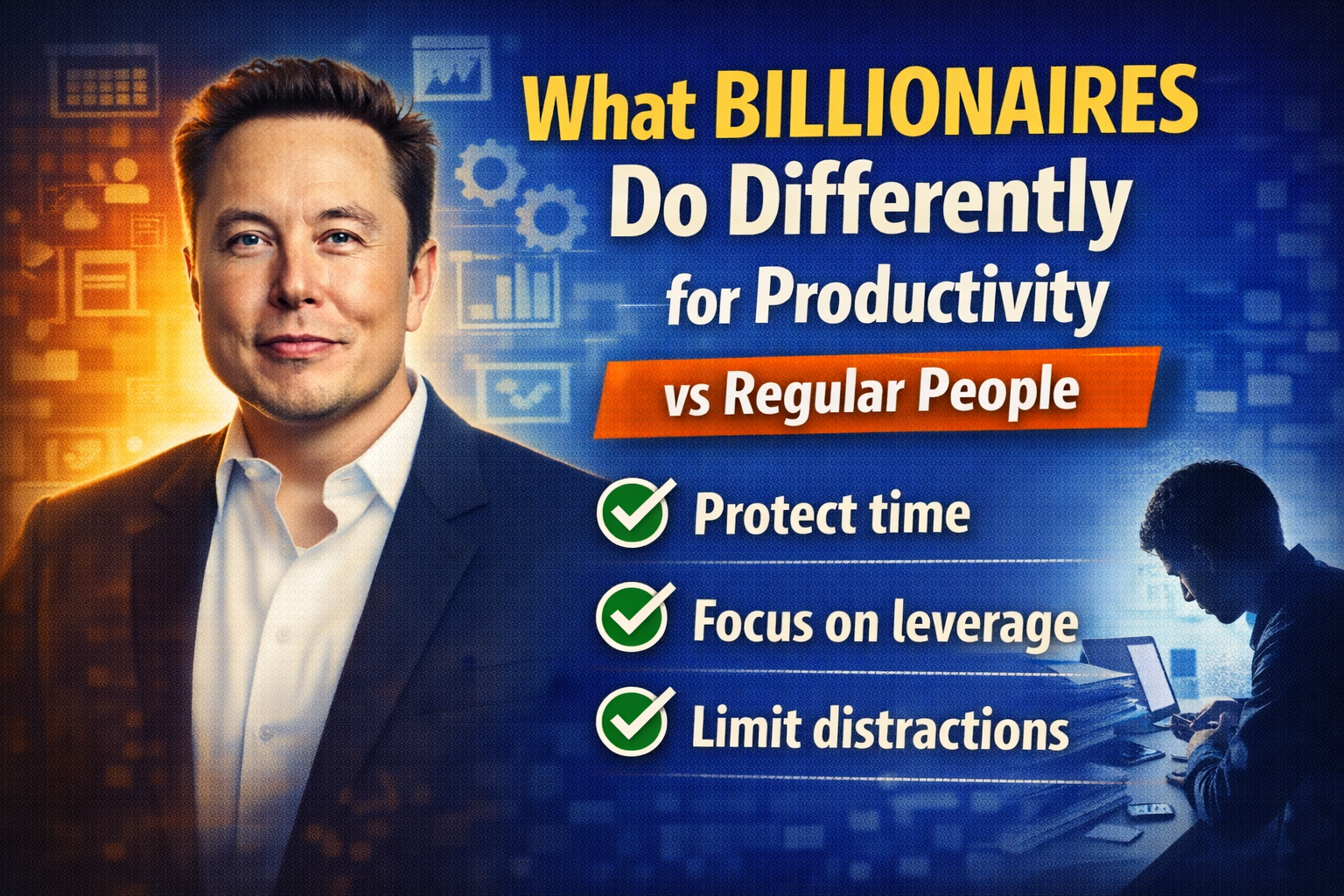
Most billionaires aren't productive because they have a secret app.
They're productive because their world is designed around a few principles that normal people rarely get to practice consistently:
- their time is protected
- decisions are high leverage
- systems run around them
- attention is treated like an asset
- they operate on long time horizons
You don't need a billion dollars to apply these ideas. You just need to translate them into "normal life" versions.
Here's what billionaires tend to do differently, in practical terms.
1) They protect their calendar like it's money
Regular people:
- let meetings and messages fill the day
- react to whatever shows up
Billionaires:
- treat time like capital
- block thinking time
- avoid random calendar clutter
Normal-life version:
- pick 2–3 "deep work" blocks per week and make them non-negotiable
- stop starting your day in the inbox
2) They focus on leverage, not effort
Regular people:
- try to do more tasks faster
Billionaires:
- ask "what one move changes everything?"
- hire, delegate, automate, or eliminate low-impact work
Normal-life version:
- each day, choose one task that:
- removes a recurring problem
- creates a reusable asset
- unlocks multiple next steps
3) They say "no" constantly (and don't feel guilty)
Regular people:
- say yes to stay polite
- overcommit and then feel stressed
Billionaires:
- say no to protect priorities
- understand that every yes costs something
Normal-life version:
- before accepting anything new, ask: "what does this replace?"
- keep a "not doing" list (meetings, apps, habits, tasks)
4) They operate with assistants, systems, and checklists
Regular people:
- keep too much in their head
- rely on memory and motivation
Billionaires:
- use external systems (people + process)
- build repeatable workflows
Normal-life version:
- build a simple weekly review checklist
- use templates for repeated work (emails, posts, client onboarding, planning)
5) They make fewer decisions, but higher-quality decisions
Regular people:
- make hundreds of small decisions daily
- waste energy on details
Billionaires:
- remove unimportant decisions
- focus on key decisions that shape outcomes
Normal-life version:
- limit daily priorities to 3
- standardize basics (same morning routine, same work block, same planning method)
6) They optimize for outcome, not busyness
Regular people:
- measure productivity by "how busy I was"
- feel good checking boxes
Billionaires:
- care about results: shipped, improved, closed, built
- track progress like an operator
Normal-life version:
- weekly question: "what did I finish?"
- track outcomes, not tasks
7) They play long-term games (compounding beats intensity)
Regular people:
- burn out in short sprints
- quit when results are delayed
Billionaires:
- commit to multi-year compounding
- stay consistent through boring phases
Normal-life version:
- plan your year as 4 quarters
- choose one compounding habit and keep it for 90 days
8) They control their environment to control behavior
Regular people:
- try to resist distractions with willpower
Billionaires:
- remove distractions structurally
- create environments where the right behavior is easy
Normal-life version:
- phone out of the room during work
- notifications off
- friction added to distraction (log out, blockers, app limits)
9) They treat attention like an asset (and guard it)
Regular people:
- multitask all day
- switch tasks constantly
- live in the notification loop
Billionaires:
- prioritize uninterrupted thinking
- avoid constant input
- design information flow
Normal-life version:
- check messages at set times
- batch communication
- keep mornings for creation, afternoons for communication
10) They review constantly (feedback loops create improvement)
Regular people:
- set goals, then forget them
- drift for months
Billionaires:
- review metrics, progress, and priorities regularly
- adjust quickly
Normal-life version:
- weekly review (15–30 minutes)
- monthly review (30–60 minutes)
- keep a running "lessons learned" list
The Honest Truth: The biggest difference is freedom from survival mode
A lot of "regular people productivity" is limited by:
- financial stress
- unpredictable schedules
- family demands
- lack of control at work
- lack of delegation
So the best translation is not "copy billionaire routines."
It's:
- build a system that reduces chaos
- protect a small amount of deep time
- focus on leverage
- review regularly
That alone can put you ahead of most people.
A Billionaire-Style Productivity System You Can Actually Use (Simple)
Daily
- pick 1 high-leverage task
- protect 60–120 minutes of focus
- limit priorities to 3
Weekly
- review what shipped
- delete low-value commitments
- plan next week in 10–20 minutes
Monthly
- review the main metric you care about
- adjust your system (friction, distractions, bottlenecks)
How Self-Manager.net Fits This
A date-based "home base" helps you apply these billionaire-style behaviors:
- priorities visible daily
- weekly reviews become automatic
- progress is stored by date (so you learn from reality, not memory)
- fewer tools means less friction and less switching
In the end, billionaire productivity isn't about hacks.
It's about living in a system where:
- time is protected
- focus is normal
- leverage is the default
- review is consistent
- compounding is the goal

AI Powered Task Manager
Plan smarter, execute faster, achieve more
Create tasks in seconds, generate AI-powered plans, and review progress with intelligent summaries. Perfect for individuals and teams who want to stay organized without complexity.
Get started with your preferred account