Why You Should Review Your Yearly Goals Periodically (Not Just Once in January)
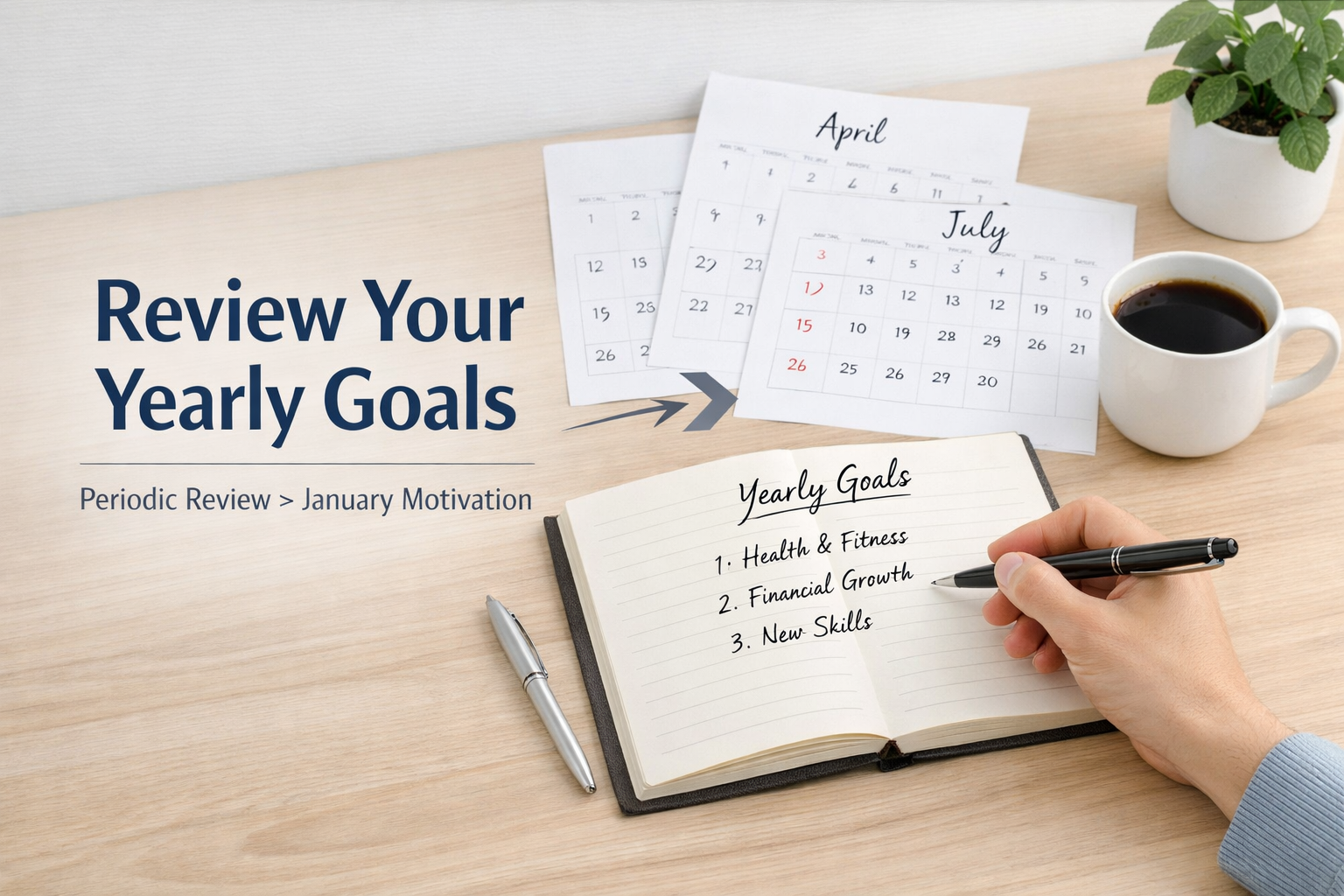
Most people set yearly goals like this:
- big motivation in January
- a burst of action
- then life happens
- months pass
- and by December, they're surprised by what did (and didn't) happen
The problem isn't lack of ambition.
It's lack of periodic review.
Because goals don't fail in one day.
They fail slowly, quietly, through drift.
That's why periodically looking at your yearly goals is one of the highest-leverage habits you can build.
Not because you need more pressure — but because you need more direction.
Goals need steering, not just setting
Setting a goal is like choosing a destination.
Reviewing the goal is like checking the map.
If you don't check the map for months, you may still be moving… but not necessarily in the right direction.
Without review, people fall into:
- doing what feels urgent
- reacting to other people's priorities
- staying busy with low-value tasks
- forgetting what they originally wanted
Periodic review prevents that.
The enemy of yearly goals is "drift"
Drift is when your days slowly stop matching your intentions.
It happens because of:
- emergencies and deadlines
- new responsibilities
- distraction and dopamine
- lack of clear priorities
- exhaustion and low energy
- too many commitments
Drift is normal.
But if you don't review, drift becomes your default.
A review is a reset.
Periodic reviews reduce stress
One of the biggest sources of stress is the feeling:
"I'm doing a lot… but I'm not sure it matters."
Periodic goal reviews give you:
- clarity
- reassurance
- confidence
- course correction
You stop living with vague guilt and start living with a plan.
Even if you're behind, the review is calming because it turns anxiety into actions.
Reviews help you make smarter decisions (not emotional ones)
Without review, decisions are often short-term:
- "I'll do this because it's urgent."
- "I'll do this because it's easy."
- "I'll do this because I feel like it."
With review, decisions become long-term:
- "Does this support my yearly goal?"
- "Is this worth my time this month?"
- "What should I say no to?"
This is how you protect your year.
You discover what works and what doesn't
If you don't review, you repeat the same mistakes.
Periodic review helps you identify patterns:
- what actions actually produced progress
- what tasks were distractions
- what habits improved your energy
- what environments made you unfocused
- what commitments drained you
Then you can double down on what works and remove what doesn't.
That's how progress accelerates.
Reviews make goals realistic (and adjustable)
A strong goal isn't rigid.
It's alive.
When you review your goals periodically, you can adjust:
- deadlines
- expectations
- strategy
- workload
- priorities
This prevents the "all or nothing" mindset.
Instead of:
"I failed my goal."
You say:
"I'm adjusting the plan so I still win the year."
That mindset is powerful.
The best review rhythm (simple and effective)
You don't need complicated systems.
A practical schedule:
Weekly (10–20 minutes)
- What mattered this week?
- What moved my goals forward?
- What's the next small step?
Monthly (30–60 minutes)
- What progress did I make?
- What distracted me?
- What should I focus on next month?
Quarterly (60–120 minutes)
- Are my goals still correct?
- What's working?
- What needs a strategy change?
Yearly goals don't need daily obsessing.
But they do need periodic steering.
What to ask yourself during a yearly goal review
Use a simple checklist:
- What are my top 3 yearly goals?
- What's the current score? (roughly: 0–100%)
- What progress did I make since the last review?
- What blocked progress?
- What should I stop doing?
- What should I do more of?
- What is the next smallest step?
- What will I commit to in the next week?
This turns goals into actionable direction.
Periodic reviews prevent the "December panic"
The worst feeling is realizing late in the year:
- you forgot your priorities
- you didn't build momentum
- you wasted time on the wrong things
Periodic reviews prevent that.
They make December feel like:
- completion
- refinement
- celebration
Instead of panic.
How Self-Manager.net makes yearly goal reviews easy
Most people avoid reviews because it feels like:
- digging through messy notes
- trying to remember what happened
- relying on memory (which is unreliable)
But software can give you a perfect memory.
With Self-Manager.net, you can:
- keep yearly goals visible and connected to weeks and days
- track progress with tasks and notes tied to dates
- review weeks/months and see what actually happened
- use AI summaries for weekly/monthly reviews (fast clarity)
- keep a consistent review routine without losing context
This turns periodic review into something simple:
open → review → adjust → move forward
Final thought: your goals don't need more motivation - they need more attention
Most people don't fail because they're incapable.
They fail because they stop looking.
Periodic review is how you keep your goals alive.
It keeps you aligned.
It reduces stress.
It improves decisions.
It prevents drift.
If you want a better year, don't just set goals.
Revisit them often enough to steer.

AI Powered Task Manager
Plan smarter, execute faster, achieve more
Create tasks in seconds, generate AI-powered plans, and review progress with intelligent summaries. Perfect for individuals and teams who want to stay organized without complexity.
Get started with your preferred account