Hard Work Is Essential - But Only When It's Aimed at the Right Thing (And Done Sustainably)
Introduction
Hard work matters.
But hard work alone is not the advantage.
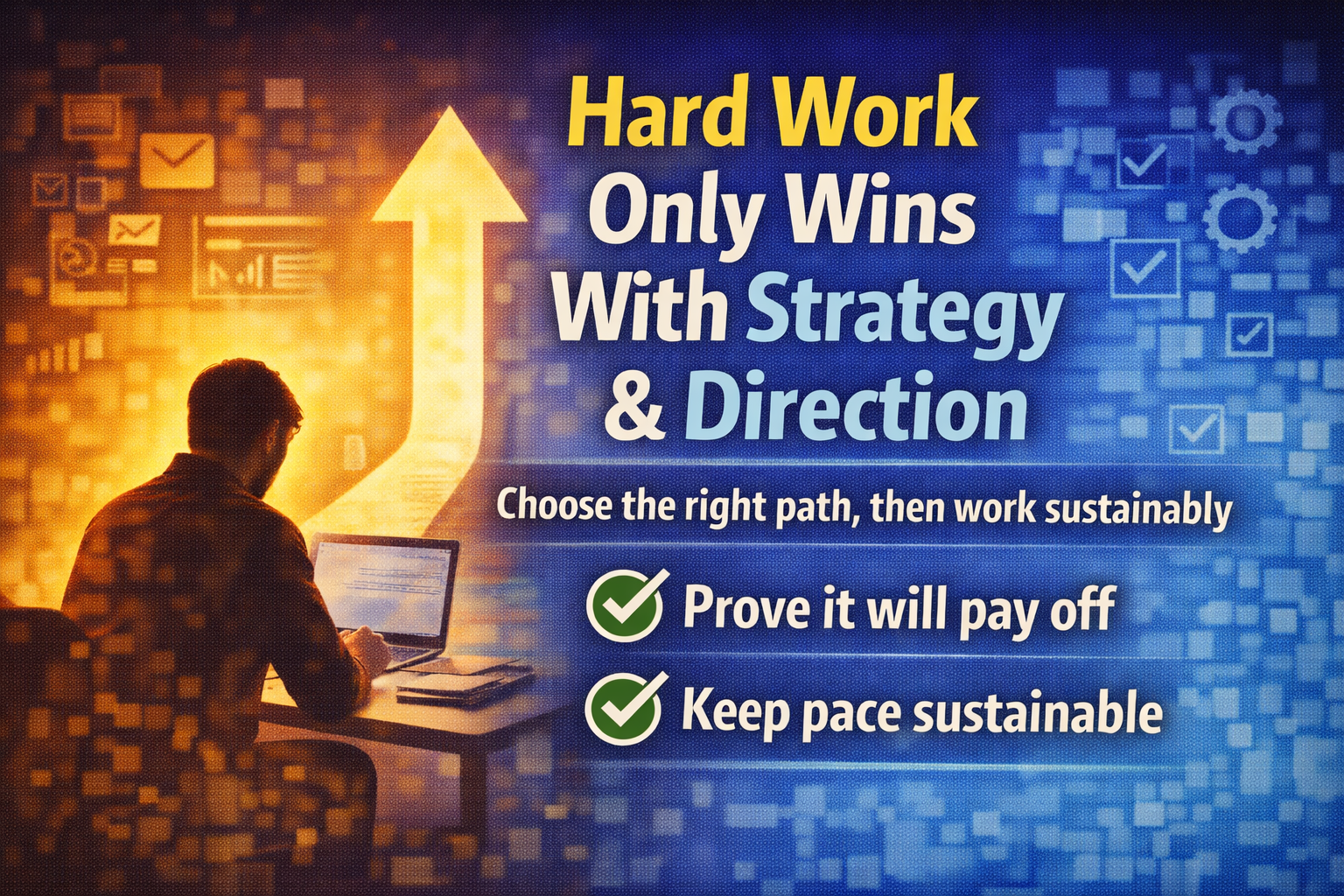
The advantage is hard work applied to the right direction, for long enough, without burning out.
Because you can work extremely hard on:
- the wrong project
- the wrong market
- the wrong strategy
- the wrong habits
- the wrong priorities
…and still end up frustrated at the end of the year.
So the real productivity lesson is simple:
Strategy and direction first. Then sustainable hard work. That combination compounds.
The common trap: "work harder" without a clear direction
A lot of people do this:
- they feel behind
- they work harder
- they become busy
- they lose clarity
- they burn out
- they restart with a new plan
Hard work becomes a treadmill.
The problem isn't effort. The problem is lack of direction and feedback.
Why direction comes before effort
Direction decides where your energy goes.
If direction is right:
- every hour builds something
- skills compound
- momentum grows
- results become more predictable
If direction is wrong:
- hours don't stack
- you keep starting over
- you get "busy progress" but not real progress
The most productive people aren't always the hardest workers.
They are the people who:
- choose a direction carefully
- then execute consistently for a long time
Hard work only pays high when it compounds
Hard work pays the most when it creates compounding assets:
- skills that increase your output over time
- content that brings traffic every month
- a product that grows users without extra hours
- a system that repeats weekly
- relationships that unlock opportunities
- reputation that increases trust and conversion
Hard work that compounds is sustainable. Hard work that doesn't compound is exhausting.
The 3-Part Framework: Strategy → Direction → Sustainable Execution
1) Strategy: pick the game that can pay off
Before you work hard, ask:
- Is the upside worth the effort?
- Does this have a real market?
- Is this something I can repeat and scale?
- Do I have an advantage here?
Examples of high-upside "games":
- building a SaaS with real distribution plans
- creating a repeatable service offer with strong positioning
- building content + SEO that compounds
- developing a high-income skill in a growing niche
Strategy is choosing the game.
2) Direction: pick the one path inside the game
Even in a good game, you can still get lost.
Direction means:
- one focus area
- one primary channel
- one main metric
- one next milestone
Example:
- Not "grow my SaaS"
- But "increase activation rate and ship 10 templates that drive SEO signups"
Direction prevents scattered effort.
3) Sustainable execution: hard work that doesn't break you
Sustainable hard work is not "relaxing." It's structured.
It looks like:
- deep work blocks
- weekly review
- consistent sleep and energy habits
- realistic pace you can repeat for months
- limited active projects (to avoid switching)
Rule: If your pace can't survive a bad week, it's not a real plan.
The real advantage: staying in the game longer than most people
Most people quit because:
- they burn out
- they get distracted
- they chase new ideas
- they stop when results are delayed
Sustainable hard work keeps you in the game. And staying in the game is a huge advantage.
Because compounding only shows up after repetition.
A Practical Checklist Before You Work Hard
Before you go all-in, ask:
- What is the highest-upside direction for my effort right now?
- What proof do I have it works (even small proof)?
- What is the one metric that matters this month?
- What will I ship weekly to create momentum?
- What pace can I maintain for 90 days?
If you can answer these, hard work becomes an advantage instead of a trap.
How to apply this in a simple weekly system
Weekly:
- choose 3 outcomes
- schedule deep work blocks
- ship something measurable
- review what worked and adjust
Daily:
- 1 main task before messages
- small wins to build momentum
- stop at a sustainable time (protect sleep)
How Self-Manager.net fits this mindset
A date-based system helps you apply "strategy + sustainable execution" because:
- you can plan weekly outcomes clearly
- you can track what you actually did by day
- you can review patterns and adjust direction
- you don't lose history when you change approach
Hard work without direction is exhausting.
Hard work with direction and sustainability becomes an unfair advantage.

AI Powered Task Manager
Plan smarter, execute faster, achieve more
Create tasks in seconds, generate AI-powered plans, and review progress with intelligent summaries. Perfect for individuals and teams who want to stay organized without complexity.
Get started with your preferred account