Top 10 Productivity Lessons from Ali Abdaal (and how to apply them with a calendar-based system)
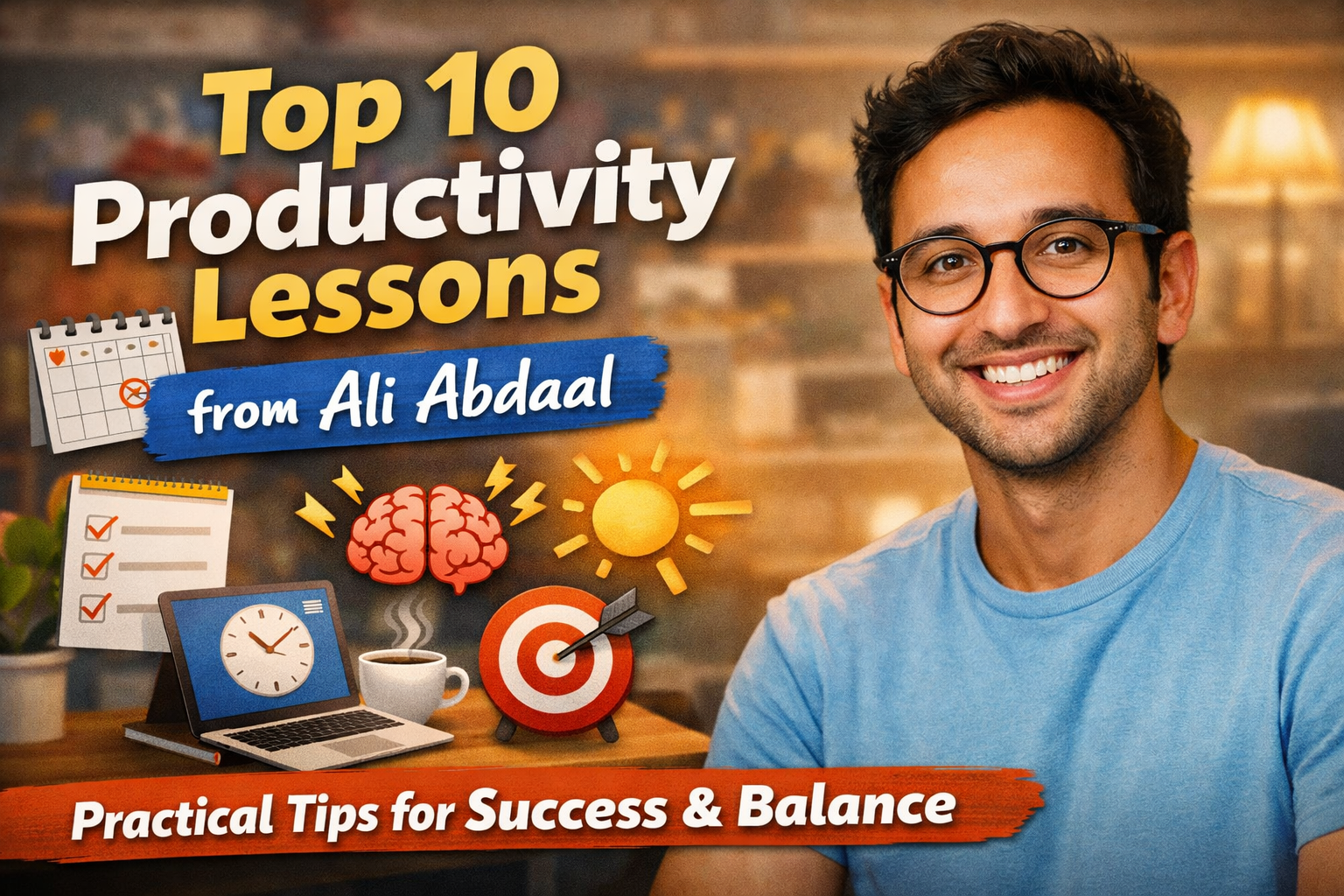
Ali Abdaal's style of productivity is different from the "grind harder" approach. The recurring theme across his work is simple: the goal isn't to become a productivity robot—it's to build a system that helps you do more of what matters while feeling better along the way.
Below are 10 practical lessons you can steal and apply immediately, especially if you're using a date-based workflow (daily/weekly/monthly planning).
1) Treat energy as your #1 productivity resource (not time)
Most people plan their day like they're managing a clock.
Ali's angle is closer to: manage your energy first, and your time becomes easier to use well.
Try this:
- Identify your best 2–3 hour "high-energy window" each day
- Put your hardest thinking work there (writing, coding, strategy)
- Push admin to your lower-energy hours
In Self-Manager:
Create a daily table called "Deep Work Block" and list only 1–2 outcomes you want from that high-energy window.
2) Make productivity feel good, or it won't last
If your system feels like punishment, you'll eventually rebel against it.
Ali's core idea is that feeling good isn't a reward after productivity—it's a fuel for it.
Try this:
- Make tasks more enjoyable (music, better environment, tiny rewards)
- Turn the first 5 minutes into something you don't hate
- Track what kinds of work actually energize you
In Self-Manager:
Add a column or checklist item: "Make this easier/funner by…" and force yourself to write one tweak before starting.
3) Build a simple system first, then add complexity later
A system you actually use beats a perfect system you abandon.
The practical move: start with the minimum viable workflow, then slowly improve it.
Try this:
- Daily: capture tasks + pick a highlight
- Weekly: review + plan
- Monthly: set priorities and themes
In Self-Manager:
Start with just:
- Daily table
- Weekly pinned table
That's enough to run your life without overbuilding.
4) Do a weekly review to fight "life entropy"
Ali describes the weekly review as a way to look back, reflect, and close open loops—so your plans don't silently decay.
Try this (15–30 minutes):
- Review the past week (calendar + notes)
- Capture loose ends and turn them into tasks
- Decide what matters next week
In Self-Manager:
Create a table every Sunday called Weekly Review and pin it. Keep the same mini-structure every week:
- Wins
- Misses
- Open loops
- Next week's focus
5) Pick a "Daily Highlight" (one thing that makes the day a win)
When everything is important, nothing is.
A daily highlight is a simple filter that prevents your day from becoming a random sequence of small tasks.
Try this:
- Ask: "If I only finished one thing today, what should it be?"
- Make that the first real work block of the day
In Self-Manager:
At the top of your daily table: Highlight → [task]
Then move that task to the top and track progress on it.
6) Separate deep work from shallow work
A lot of people "work all day" but barely touch deep work.
Ali frequently emphasizes the difference: deep work moves the needle, shallow work maintains the machine.
Try this:
- Define your deep-work activities (coding, writing, designing, planning)
- Schedule them like meetings
- Batch shallow work (email, messages, admin) into a smaller window
In Self-Manager:
Create two sections in your daily table:
- Deep Work (max 2 items)
- Shallow Work (batch)
7) Reduce distractions by designing your environment
You don't win focus by "trying harder." You win by making distraction harder.
Try this:
- Remove easy dopamine triggers (tabs, phone, notifications)
- Use a dedicated workspace or "focus ritual"
- Pre-load your next action so starting is automatic
In Self-Manager:
End each day with a tiny note:
- "Next action tomorrow:" (one sentence)
This makes the next morning frictionless.
8) Beat procrastination by lowering the starting cost
Most procrastination is "starting pain," not laziness.
So the strategy is: make the first step ridiculously easy.
Try this:
- Break tasks into "stupid small" first actions
- Start with 2 minutes
- Define what "done" looks like before you begin
In Self-Manager:
Turn big tasks into a checklist of micro-steps. If the first step can't be done in 2–5 minutes, it's still too big.
9) Sustainable productivity beats burnout productivity
Short bursts can work… until they don't.
Ali's broader approach pushes toward long-term consistency: rest, reflection, and pacing are part of the system, not exceptions.
Try this:
- Plan rest like work (walks, workouts, social time)
- Use "seasons" (high intensity weeks + lighter recovery weeks)
- Keep an eye on energy trends, not just output
In Self-Manager:
Use your week view to mark recharge blocks and treat them as non-negotiable appointments.
10) Zoom out: align work with what actually matters
Productivity without direction becomes efficient wandering.
Ali often points back to clarity: what do you want, and why?
Try this:
- Set a few meaningful goals for the quarter
- Translate each goal into weekly actions
- Review and adjust (don't cling to a plan that isn't working)
In Self-Manager:
Create a pinned table for:
- Quarter Focus
- This Month
- This Week
Then link your daily highlight back to one of those. If it doesn't connect, question it.
A simple way to apply all 10 lessons (without overthinking)
If you want the minimal, practical setup:
- Daily table: Highlight + Deep Work (2) + Shallow batch
- Weekly pinned table: Weekly Review + next week's top 3
- Monthly pinned table: themes + priorities
- Add one "feel good" tweak before hard tasks
- Track energy patterns and move deep work to your best hours
That's a complete system.

AI Powered Task Manager
Plan smarter, execute faster, achieve more
Create tasks in seconds, generate AI-powered plans, and review progress with intelligent summaries. Perfect for individuals and teams who want to stay organized without complexity.
Get started with your preferred account